

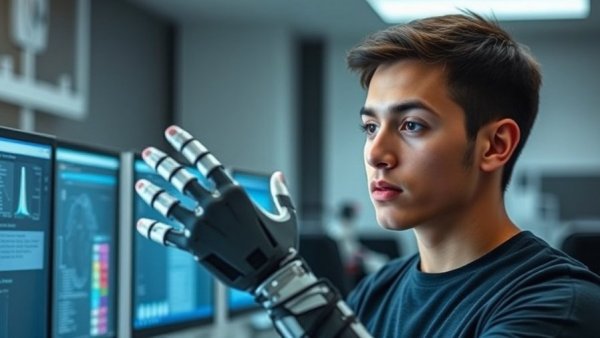
Revolutionizing Rehabilitation: The New Era of Bionic Hands
In a groundbreaking development, a team at the University of Utah has introduced a new generation of bionic hands that not only replicate the mechanical functions of a human hand but also restore the sense of touch. This innovation is embodied in the experience of Avi Davidson, who lost his left hand as a teenager. Having cycled through various prosthetics with limited functionality, Davidson's latest prosthetic, connected directly to his forearm nerves, has transformed his life by empowering him to feel pressure while manipulating delicate objects, such as grapes and eggs.
The Importance of Sensory Feedback in Prosthetics
Traditionally, prosthetic devices have focused on improving functionality, often neglecting the critical aspect of sensory feedback. Doctors and researchers agree that restoring a sense of touch is essential for user autonomy and quality of life. Davidson's experience as the first to utilize the bionic hand at home underscores the profound impact that sensory integration can have on day-to-day activities. This innovation not only enhances his physical capabilities but also reinstates emotional connections with loved ones, as he is now able to hold hands again—a simple yet significant gesture.
Implications for Businesses in Healthcare and Biotech
As healthcare organizations and biotech firms look to integrate advanced technologies into their products and services, this bionic hand serves as a powerful proof-of-concept. Executives in these sectors must consider the implications of innovations that not only push the boundaries of what technology can achieve but also focus on the holistic experience of the end user. Enhanced patient outcomes illustrate the importance of investing in research that prioritizes user experience and sensory connections in medical devices.
Future Predictions: The Path Ahead for Prosthetic Technology
Looking forward, the trend toward more advanced prosthetics that integrate sensory feedback is expected to grow. This movement will likely spur an increase in funding and interest in similar technologies across various sectors, including robotics and AI. As prosthetics incorporate more sophisticated sensors and communication systems with the brain’s neural pathways, we could see a future where these devices function almost seamlessly, reflecting the complex dexterity of the human hand.
Challenges and Considerations for Adoption
While these advancements are promising, challenges remain in the widespread adoption of such technologies. Issues related to accessibility, cost, and regulatory approval must be addressed. Firms must advocate for inclusive policies that not only promote research and development but also ensure that such innovations are available to those who need them most. Building partnerships with healthcare providers and leveraging emerging tech frameworks can lead to improved access and integration into medical systems.
Actionable Insights for Industry Leaders
For executives and decision-makers, recognizing the trends in sensory prosthetics can inform strategic directions for innovation and market positioning. Engaging with research institutions, investing in biotech startups, or considering collaborations could position businesses at the forefront of this evolving landscape. By understanding the human experience integrated within technology, organizations can create products and solutions that resonate deeply with users and stakeholders alike.
In conclusion, as the realm of bionic devices expands, embracing the technology that brings back sensory feedback will be crucial in shaping the future of prosthetics. Lead the charge for innovation and explore how your organization can be part of this transformative journey in healthcare.


Write A Comment