


December 17.2024
2 Minutes Read
Unveiling the Strategies of Leading Growth Transformers: Key Behaviors Explained
47 Views
0 Comments
Related Posts All Posts

11.17.2026
Why UK Police Facial Recognition Failures Signal Risks for Business AI
Update Challenging the Reliability of Facial Recognition Technology The recent findings from His Majesty’s Inspectorate of Constabulary and Fire & Rescue Services (HMICFRS) have thrown a spotlight on the implications of using facial recognition technology, particularly retrospective facial recognition (RFR), in policing and beyond. With police forces across England and Wales being scrutinized for their practices, the results are both a cautionary tale and a wake-up call for businesses employing similar automated systems. What Went Wrong in Recent Cases? The HMICFRS report highlighted troubling instances where police officers acted on facial recognition matches without sufficient corroboration, leading to wrongful arrests. In one notable case, an individual was arrested for shoplifting based solely on RFR results—without confirmation that he matched the suspect's image. Such heavy reliance on unresolved matches raises crucial questions about the robustness of automated technology. The Science Behind Facial Recognition RFR and live facial recognition (LFR) serve different purposes in law enforcement. RFR is utilized post-incident, using previously recorded images to attempt to identify suspects, while LFR employs real-time surveillance to match individuals against established watchlists. The differentiation is essential; RFR results should generate investigative leads rather than judgments of guilt. Furthermore, algorithmic biases in RFR also surfaced, with reports indicating that the technology may misclassify individuals based on gender and ethnicity. This inconsistency poses significant ethical dilemmas for organizations relying on automated systems in sensitive applications. Implications for AI in Business For business leaders and executives, this critique of police facial recognition systems offers substantial lessons. Many organizations today integrate AI in ways akin to law enforcement, using algorithms for job applicant screening, fraud detection in banking, and threat assessments in security operations. The risks are strikingly analogous: a lack of proper verification protocols can lead to misjudgments that harm reputations and disrupt lives. Developing a Strategy for Responsible AI Use To mitigate these risks, companies must prioritize auditing their AI systems and ensuring comprehensive training for personnel on the limitations of these technologies. Just as police forces must treat RFR outputs as mere leads needing validation, so too must businesses treat automated outputs as foundations for further inquiry, rather than final decisions. Moving Toward Ethical AI Practices The HMICFRS report serves as a clarion call for all sectors. By proactively addressing and questioning the validity of our automated systems, organizations can better navigate the complexities of AI integration while ensuring fair and ethical outcomes. Ensuring transparency and establishing systematic checks and balances is essential to sustain trust in the deployment of AI technologies. As industries face rapid digitization, the lessons from England & Wales police departments remind us that the path to AI integration carries inherent risks that need addressing head-on. Ignoring these lessons may perpetuate not only technological disparities but also ethical quandaries that are harder to rectify once established. Executives and decision-makers must ask: Are we prepared to navigate the challenges that automated systems present? It's time to enhance our strategies by scrutinizing our technologies with diligence and consideration. Embrace the opportunity to ensure your organization adopts responsible AI practices. To gain further insights on implementing accountability in AI, consider connecting with industry experts. Click here for a valuable discussion.

11.17.2026
How Glass Page Transforms AI Utilization for Business Growth
Update Revolutionizing Business Growth with AI: An Overview of Glass Page In the age of digital transformation, mid-to-large sized companies are increasingly turning to artificial intelligence (AI) as a cornerstone of their growth strategy. One of the latest innovations in this space is Glass Page, which brings forth an original approach by enabling seamless interaction through AI-driven tools. It democratizes access to critical information for executive decision-making, reflecting the convergence of AI and enterprise automation. Unlocking Potential: The Value of AI in Scaling Businesses For executives, the ability to make data-driven decisions swiftly is invaluable. Glass Page serves to enhance this capability through intuitive interfaces and analytics tools. As businesses face mounting pressure to adapt and scale rapidly, leveraging AI capabilities can help organizations streamline operations, enhance productivity, and ultimately drive growth. Comparative Insights: How Glass Page Stands Against Traditional Tools Unlike traditional data management systems that can be rigid and cumbersome, Glass Page's unique architecture allows for more flexibility and adaptability to various business needs. By integrating with existing systems, it helps leaders harness AI without major overhauls of their structures. Future Implications: What the Adoption of AI Tools Means for Businesses The ongoing integration of AI in business processes is expected to accelerate exponentially. Tools like Glass Page not only enhance decision-making but also position businesses to leverage insights that were previously inaccessible. Consequently, companies that adopt these technologies will likely find themselves ahead of their competition in terms of decision-making speed and accuracy. Practical Implementation: Embracing AI to Enhance Business Strategies For executives exploring AI applications in their operations, understanding best practices for implementation is critical. This includes establishing an environment that encourages data sharing, investing in training for teams, and ensuring alignment between business objectives and AI tools. With initiatives like Glass Page, organizations can pave the way for successful AI integration. In conclusion, as the landscape of business continually evolves, so too does the imperative for leaders to harness AI technologies for sustained growth. To learn more about these innovations or discuss how your organization can leverage AI for improved outcomes, schedule a chat today.
11.17.2026
Arista Networks Targets AI’s Distributed Inference: Key Insights for Executives
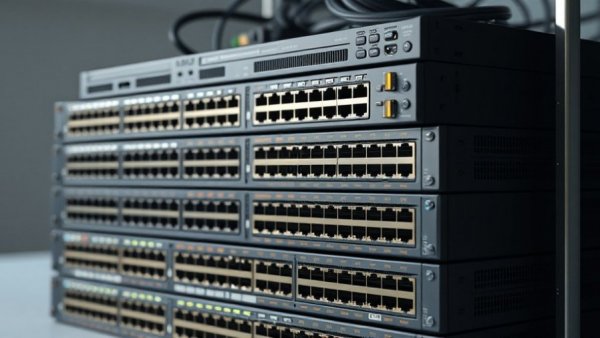
Update Arista Networks: Pioneering the Future of AI Distributed Inference As the landscape of artificial intelligence (AI) continues to evolve, Arista Networks is strategically positioning itself at the forefront of this transition. With an increasing focus on distributed inference, it’s evident that the both hardware and networking components are just as crucial as the software algorithms driving AI solutions. This pivot by Arista at the SC26 conference reflects a broader necessity to address latency, sovereignty, and resource optimization in AI operations. Understanding Distributed Inference: Why It Matters The concept of distributed inference in AI entails processing information dynamically across multiple locations rather than relying exclusively on centralized data clusters. Brendan Gibbs, Arista’s AVP of product line management, succinctly captures the shift by noting that as AI becomes more complex, particularly with tasks such as nuanced chatbots and multi-step problem-solving, the requirement for enhanced network infrastructure becomes paramount. This isn’t just a technical adjustment; it’s a fundamental change in how AI is deployed and managed. Key Drivers Behind the Shift to Distributed Inference Several factors influence the momentum toward distributed inference: Latency: Quick responses are essential for certain AI functions, especially those involving real-time data processing. Centralized systems can suffer from delays as requests are sent to and processed by remote servers. Sovereignty: As regulatory environments tighten, particularly in regions like Europe, the pressure mounts to keep data within borders, making localized processing increasingly appealing. Resource Efficiency: Companies are maximizing existing infrastructure, deploying AI where the capacity allows, which in turn challenges traditional views of data handling. The Role of Networking Technology in AI’s Evolution Arista’s new Etherlink R4 routing platforms signify a strategic enhancement to support distributed AI. Notably, their compact routers are designed for efficiency and cost-effectiveness, allowing organizations to obtain advanced networking capabilities without investing in prohibitively expensive infrastructure. This situational awareness in market needs is crucial, especially given the unpredictability of future traffic demands as AI adoption expands. Investment Protection in AI Infrastructure One significant advantage of Arista’s offerings is their focus on longevity and adaptability. Featuring robust 400G uplinks, these routers are positioned not just for immediate needs but are designed with future scalability in mind. This forward-thinking approach ensures that businesses can adapt sans the headache of extensive hardware upgrades, which can be costly and disruptive. Conclusion: The Road Ahead for AI Networking In aligning its product strategy with the future demands of AI infrastructure, Arista Networks exemplifies proactive innovation. By focusing on the nuances of distributed inference, the company is not only enhancing the performance of AI applications but also addressing overarching industry concerns surrounding latency, security, and resources. For executives and decision-makers navigating this complex landscape, understanding these shifts will be integral in crafting adaptive AI strategies that are resilient and forward-looking.


Write a small description of your business and the core features and benefits of your products.


LPJM SOLUTIONS
(571) 269-6328
AVAILABLE FROM 8AM - 5PM
City, State
10 Church St. Manchester, CT, 06040 USA
ABOUT US
Our CORE values for almost 27 year have been LOVE, Loyalty & Life-Long Friendship.
AI has made this the Golden Age of Digital Marketing.
© 2026 CompanyName All Rights Reserved. Address . Contact Us . Terms of Service . Privacy Policy

Write A Comment