

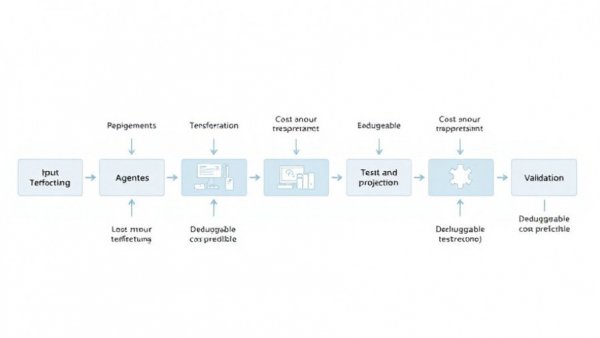
Understanding Multi-Agent Coordination Patterns
As enterprise teams dive into the complexities of multi-agent systems, the question isn’t just about the technological underpinnings but about how these systems align with business goals. Traditional paradigms of coordination often lead to bottlenecks, as contemporary organizations find that nearly 88% of AI pilots fail to transition from concept to production. It’s clear, the issue lies less with the models themselves and more with the implementation strategies applied.
Multi-agent coordination is fundamentally a distributed systems challenge. If teams lack a firm grasp on the intricacies of distributed architectures, the risk of introducing complexity and confusion escalates tremendously. More alarmingly, statistics indicate that ten sequential design steps deliver a mere 59.9% reliability, hinting at a compounded risk with each additional dependent handoff.
Identifying Effective Coordination Patterns
When deciding the architecture for multi-agent systems, understanding the distinction between Tier 1 and Tier 2 coordination patterns is crucial. Tier 1 relies on deterministic control flows, where the path is predefined, whereas Tier 2 allows models to select their paths autonomously at runtime.
Costly Anti-Patterns and Their Solutions
Not all patterns yield success; indeed, several anti-patterns can derail an otherwise promising design. Notably, the "God Agent" model, where one agent manages multiple roles, can lead to diluted effectiveness. Instead, divvying responsibilities into bounded agent spheres enhances clarity and accountability.
Implications for Manufacturing Dynamics
Manufacturing settings present unique challenges—a 60-second takt time in automotive production means every second matters, and inefficiencies can mean revenue loss. Therefore, adopting a hybrid edge-cloud architecture not only ensures timely data processing at production lines but also safeguards operations against safety risks induced by AI errors.
Future Trends in AI-Mediated Manufacturing
Looking ahead, the landscape of AI-driven manufacturing will skew towards more adaptive and intelligent systems. This evolution will necessitate a focus on reducing complexities while enhancing reliability through simplified architectures. As teams develop their multi-agent systems, adhering to best practices and preserving operational integrity will remain paramount.
In conclusion, the conversation surrounding multi-agent systems could redefine industrial practices when approached with foresight. As decision-makers, learning these patterns and anti-patterns equips organizations to innovate responsibly. For larger insights on navigating this transformative journey, consider reaching out for tailored guidance.


Write A Comment