

Transforming Financial Operations with AI
In a world buzzing with data, financial institutions are grappling with the monumental task of processing vast amounts of information while ensuring accuracy and compliance with tight regulatory frameworks. Leading the charge in this arena is Duco, an innovative operations platform that caters to tier-one banks and financial services firms. With over 20 billion transactions processed monthly for 200+ clients, including some of the largest banks and asset managers worldwide, Duco is at the forefront of revolutionizing financial data automation.
From Traditional Machine Learning to Agentic AI
Traditionally relying on classical machine learning models, Duco found itself facing significant challenges: the inability of these models to adapt to the rapidly changing landscape of financial data and the extensive historical data they required for training. Rob Gates, Duco's Chief Architect, remarked, “The classical prediction models worked to an extent, but they weren’t agile or flexible enough.” To overcome these limitations, Duco strategically transitioned to leverage Amazon Bedrock and Amazon Bedrock AgentCore, fundamentally altering their approach to data processing.
Why Choose Amazon Bedrock?
Amazon Bedrock provides a fully managed service that empowers organizations to harness advanced foundation models while ensuring robust security and compliance—a critical aspect for the financial services sector. Notably, Bedrock ensures data remains within the AWS environment and is not utilized for training purposes, making it an optimal choice for firms like Duco that prioritize security. Additionally, the platform’s model flexibility allows Duco to select the most suitable AI model for varied tasks without infrastructural complexity, a vital feature in the evolving landscape of regulations.
Operationalization of AI Agents at Scale
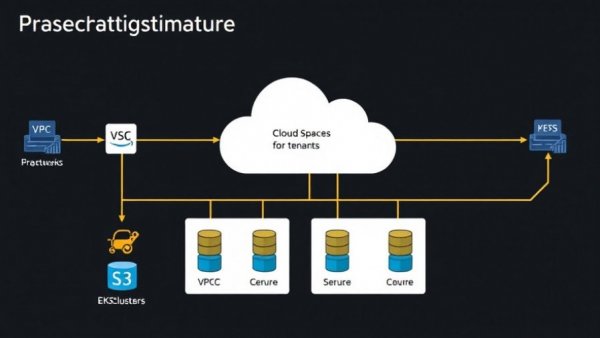
Transitioning to Amazon Bedrock and AgentCore has enabled Duco to operate in a multi-tenant architecture while ensuring strict data isolation for each client—essential for regulatory compliance. This architecture allows each bank’s unique operational context to be maintained separately, ensuring no overlap between clients, thus preserving data integrity. Furthermore, this architecture supports automated workflows that speed up processes significantly, for instance, reducing onboarding costs by 70% and increasing straight-through processing by over 20% for certain clients.
Streamlining Workflows with Intelligent Automation
By implementing AI-driven workflows, Duco has drastically reduced the time required for complex tasks. The traditional onboarding processes, which could take years, are now completed in a fraction of the time—10 times faster, allowing for quick adaptation to new financial data types and formats. The power of AI not only facilitates faster turnarounds but also ensures higher accuracy in exception resolution, thereby freeing up the human workforce to focus on making critical decisions rather than performing routine tasks.
Conclusion: Embracing the Agentic Future
For leaders in the financial services space, Duco's framework signals a new era of operations where AI does not replace humans, but rather enhances their roles. This innovative model fosters collaboration between human expertise and AI capabilities, paving the way for efficiency and effectiveness in financial operations. As Duco demonstrates, adopting an agentic AI approach supported by a robust framework like Amazon Bedrock can lead to transformative outcomes in today's data-driven financial landscape.
Take action today to explore how your organization can leverage AI for transformation. Connect with industry leaders and discuss tailored solutions that enhance your financial operations at this link.


Write A Comment