

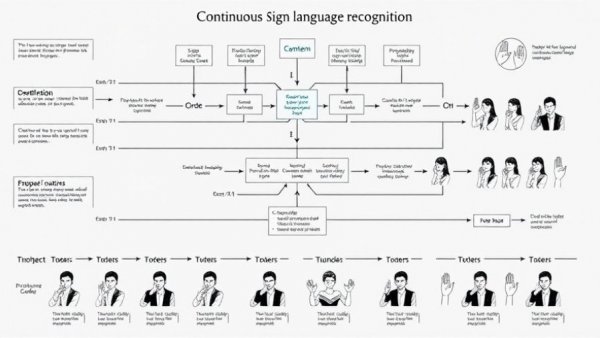
The Changing Landscape of Continuous Sign Language Recognition
As society increasingly embraces inclusive technologies, continuous sign language recognition (CSLR) has emerged as a pivotal area of research. At the forefront of this evolution is Sarah Alyami, a visionary in the field whose dissertation on CSLR and the development of the Isharah dataset reflect a significant leap toward enabling greater communication accessibility for Deaf and hard-of-hearing communities.
The Importance of Real-World Data in CSLR
Alyami's development of the Isharah dataset marked the first of its kind for sentence-level Saudi Sign Language, capturing real-world signing scenarios instead of controlled environments. This novel approach addresses a historical gap in AI research, where most sign language recognition systems have struggled with isolated sign understanding. Alyami's work emphasized that effective deployment of AI in interpreting sign language relies not only on sophisticated algorithms but also on representative and large-scale datasets.
Advances in AI Technologies Enhance Sign Language Recognition
The core of Alyami's breakthroughs lies in the adaptation of transformer-based architectures, which help in processing the complexities of human gestures effectively. By integrating data-centric methods with robust visual understanding, Alyami has tackled some of the significant challenges in real-time communication, a feat crucial for organizations looking to leverage AI for accessibility.
Recognizing the Broader Impact of CSLR Research
This research is not just technical; it has broader societal implications. As Alyami noted, the advancements in CSLR can reduce communication barriers, fundamentally changing the lives of those within the Deaf community. Organizations seeking to adopt AI technologies should recognize the importance of AI's potential to enhance inclusivity in their services and products.
Future Directions in Continuous Sign Language Recognition
Looking ahead, Alyami envisions further expansion of the Isharah dataset, focusing on increasing its linguistic diversity and updating recording conditions to mirror contemporary sign language use. Her commitment to societal impact through research illustrates an inspiring model for businesses looking to drive innovation while addressing significant social challenges.
How Organizations Can Leverage CSLR for Transformation
Organizations, particularly those led by CEOs, CMOs, and COOs, must explore ways in which the integration of CSLR can enhance their communication strategies. Embracing technology that enables access for all can significantly improve business productivity while reflecting a commitment to social responsibility.
Concluding Thoughts on Inclusion in Technology
Sarah Alyami's pioneering research in continuous sign language recognition is a critical step toward creating a more inclusive technological landscape. For organizations investing in AI, understanding and adopting such transformational technologies is essential, not just for compliance but as a pathway to genuine social change.



Write A Comment