

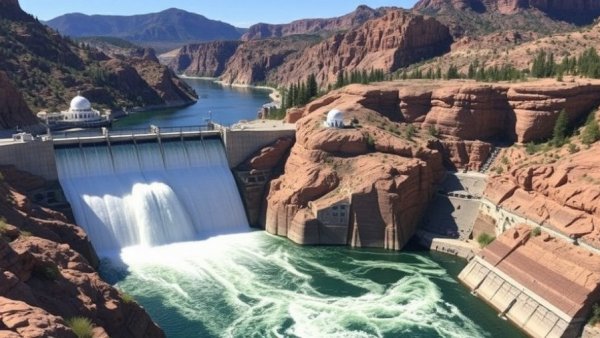
Hydropower under Siege: A Summer of Record Low Generation
This summer, the Southwest United States faced an alarming dip in hydropower generation, reporting a staggering 28% decrease compared to the 10-year average. As drought conditions persist across the region, the implications are far-reaching for not only energy production but also for the economies and ecosystems that depend on reliable water sources.
Key Drivers of Hydropower Decline
The chief culprit behind this reduced output is the ongoing drought affecting the Colorado River Basin, which serves as a vital lifeline for hydropower generation. The two principal reservoirs, Lake Powell and Lake Mead, are both at historically low levels, significantly threatening their ability to produce electricity through existing dam infrastructure. At the end of September, Lake Powell was perilously close to the minimum operational threshold at just 3,518 feet deep, raising concerns about its capability to sustain the Glen Canyon power plant.
Climate Change: The Unseen Hand
Climate change is undeniably central to this crisis. Record low flows of the Colorado River, exacerbated by shifting weather patterns, compound the already dire situation. Temperatures are rising, leading to increased drought frequency and reduced snowpack—the lifeblood of many reservoirs in the Rockies—resulting in diminished hydropower reliability. As a result, industry experts predict stark declines in hydropower capacity over the next few years.
Global Ramifications: Energy and Greenhouse Gases
Not only is hydropower generation faltering in the Southwest, but this shortfall is contributing to a concerning uptick in global energy-related greenhouse gas emissions. According to a recent report by the International Energy Agency, worldwide reductions in hydropower generation accounted for approximately 40% of the rise in emissions last year. This pattern raises urgent questions about the future strategy for energy sourcing, particularly in a world increasingly reliant on renewables.
Hope on the Horizon: The Role of El Niño
Yet, clouds may have a silver lining. As we transition into winter, predictions related to El Niño have sparked hope for increased precipitation across the southern U.S. Early reports indicate that heavy rainfall has already caused Lake Powell to rise by more than 20 feet from its September nadir. While this temporary relief is promising, experts caution that it will require sustained, significant rainfall over an extended period to restore water levels to a healthy state.
Strategies for the Future: Adaptation and Innovation
For executives and decision-makers in both energy and agriculture, the current situation presents an urgent call to action. Organizations must prioritize innovations in water management, renewable energy strategy, and climate adaptation frameworks to navigate these complex challenges. Options may include investments in alternative energy sources, advanced irrigation techniques, and research into more resilient energy infrastructures.
Final Thoughts: A Call to Action
The relationship between hydropower, climate change, and economic stability is intricate and increasingly pressing. As industry leaders, the actions taken now will not only impact energy availability but also the broader environmental landscape. Explore actionable insights and strategies to address these challenges by connecting today.
Learn more about effective energy strategies and solutions here.





Write A Comment