

Understanding the Complexity of Code Comparison
In today’s intricate digital landscape, comparing code changes has evolved well beyond simplistic text comparisons. Just like code, formal policies require nuanced understanding to discern true meaning and implications of their changes. Traditional methods of viewing differences focus primarily on syntactic shifts, often overshadowing true semantic changes that can significantly impact behavior and outcomes.
Why Semantic Diffing Matters
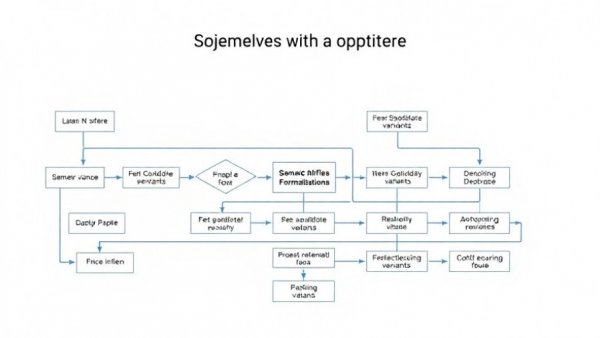
Semantic diffing represents a critical advancement in how we analyze and improve policy compliance and behavior. By deploying anti-unification methods, organizations can effectively summarize what policies share and where they diverge. This approach prevents crucial variations—like an unintended switch from AND to OR—from slipping under the radar of a basic syntactic review.
The Mechanism Behind Anti-Unification
At its core, anti-unification operates through an engine that examines expressions within an e-graph context. This sophisticated approach allows for the identification of commonalities in policy structures while employing algebraic laws to affirm policy equitability. For business leaders, understanding this mechanism is vital; it not only enhances the visibility of policy differences but also feeds into broader discussions on organizational transformation through AI and automation.
The Real-World Application: Autoformalization in Policy Management
A practical application of semantic diffing emerges in processes like autoformalization, which converts natural language requirements into executable formal languages. With efficacy becoming increasingly essential, the implications for CEOs, CMOs, and COOs are profound. By automating policy generation via large language models, businesses can derive multiple formal outputs, yet must scrutinize these for variations using semantic diffing to maintain compliance and operational integrity.
Case Study: Translating Policies into Action
Consider a business requiring stringent data protection rules. With tools capable of semantic diffing, firms can systematically evaluate options to ensure they align with regulations while adapting to internal objectives. For example, when two distinct policy proposals arise around data encryption for sensitive materials, semantic diffing can reveal not just surface discrepancies but also deeper implications for operational harmony. Ensuring all stakeholders are aware of critical policy distinctions allows for informed decision-making, fostering alignment throughout the organization.
Looking Ahead: The Future of Policy Analysis
As AI technologies continue to evolve, the interplay between semantic diffing and organizational efficiency promises significant long-term benefits. Early adopters of semantic analysis beyond mere statistical models are poised to set industry standards, redefining how organizations approach policy management. For leaders, harnessing these innovations could lead to not just compliance advantages, but also substantial competitive edges in their markets.
In summary, the conversations surrounding semantic diffing signify a shift in how organizations will approach compliance and policy deployment in the age of AI. Embracing these tools can be pivotal in advance of digital transformation initiatives.
Please ensure you connect with us to discuss how AI can help your organization innovate and transform. Schedule a consultation today!


Write A Comment