

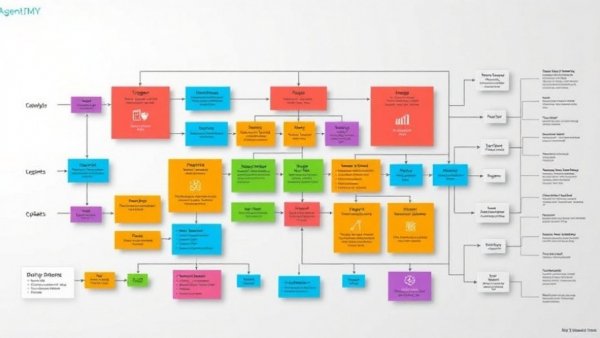
Understanding Agentic Work: A New AI Frontier
As organizations strive for greater efficiency and productivity in an increasingly digital landscape, the evolution of AI tools like Amazon Quick has become a game-changer. By transitioning from question-answering capabilities to full-fledged action-takers—scheduling meetings, conducting research, and generating reports—these systems redefine what agents can achieve.
The Importance of a Shared Vocabulary
However, amidst this evolution lies a significant challenge: the absence of a unified definition of the core components—primitives—of agentic work. When users request functionality like, "monitor my Slack channel and send me a daily digest," are they speaking about a new agent, revising an existing one, or creating a workflow? This ambiguity results in confusion and inefficiency, showcasing the need for a standardized vocabulary in the field.
Breaking Down the Agentic Framework
This article will delve into the four essential primitives that form the foundation of agentic work: When?, What?, Who?, and How? These elements provide clarity and structure in understanding the cooperative dynamics of AI agents.
Triggers: The Activation Mechanism
At the forefront is the trigger, which activates tasks while simultaneously conveying instructions. This dual role is crucial: the trigger encapsulates both the "When?" and "What?" aspects of an operation, guiding execution based on context. For example, a human-initiated request may prompt a responsive action from the agent, while a pre-scheduled task could operate under stricter constraints.
The Role of Agents in Execution
The concept of agents is pivotal—they are the persistent, learning actors responsible for interpreting the instructions they receive. Each agent’s uniqueness stems from its historical interactions and learned capabilities, setting it apart even when given identical inputs. This distinction is vital for organizations seeking to deploy AI effectively, as it reinforces the notion that the agent’s identity is not merely the tasks it performs but its evolving intelligence.
How Capabilities Shape Agentic Actions
Capabilities dictate how agents operate, allowing a spectrum of actions ranging from deterministic processes to fully agentic behaviors. This mixture highlights a confidence contract between the user and the system—the degree to which the user defines actions versus leaving them open-ended for the agent's discretion.
Conclusion: The Path Ahead
The convergence of these primitives into a cohesive framework facilitates clearer comprehension of the operational capabilities of AI agents. For CEOs, CMOs, and COOs, understanding this taxonomy not only unlocks the potential of enterprise automation but also heralds a more strategic approach to leveraging AI in organizational transformation.
Ready to explore how AI can transform your organizational strategy? Let’s connect!


Write A Comment