

The Evolution of AI-Powered Robotics Training
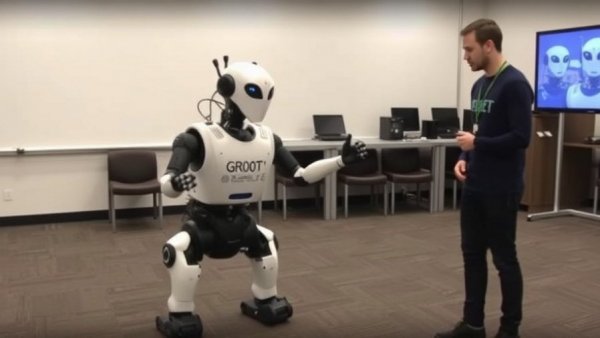
Nvidia's recent unveiling of GR00T 2 marks a significant leap in the field of robotics training, introducing a system capable of learning from human demonstrations rather than relying solely on direct robot programming. This innovative approach, presented at the Conference on Robot Learning in Austin, Texas, aims to streamline the robot training process, potentially revolutionizing automation in various industries.
Utilizing Human-Learned Skills: A Game Changer for Robotics
GR00T 2's design enables it to predict actions in future videos while simultaneously learning from both human video demonstrations and robot performance. With an impressive dataset that incorporates over **400,000** hours of video—of which around **100,000** hours will be made publicly available—Nvidia aims to significantly alleviate the labor involved in robot training. In trials, GR00T 2 reportedly achieved a **95%** success rate when given multiple demonstrations of tasks, showcasing its potential efficiency compared to conventional training methods that rely heavily on task-specific programming.
Emerging Applications Across Industries
Businesses that are exploring the integration of GR00T 2 into their operations include big names like Foxconn and Siemens, with applications targeting server manufacturing and industrial processes, respectively. These real-world trials are essential for understanding how GR00T 2 can be adapted during production cycles to reduce downtime and enhance throughput. Still, it remains crucial for businesses to undertake thorough assessments of how this new technology fits into their existing operational structures.
Important Considerations for Implementation
While the prospect of less time needed for initial task demonstrations is promising, business leaders must consider several key factors before integrating GR00T 2:
- Task Reliability: Conduct tests that evaluate every aspect of the working environment, including potential failure conditions.
- Throughput: Measure overall performance, focusing not merely on success rates but also on recovery times and needed interventions.
- Integration Costs: Budget for compatibility issues with existing robotics and software systems, securing the necessary engineering support.
- Operational Ownership: Clearly define roles for ongoing model updates and monitor performance to ensure operational efficiency.
Future Implications of Robotics Training Advancements
The ongoing advancements in AI and robotics have the potential to reshape manufacturing sectors and beyond. As companies adapt to fluctuating market demands, systems like GR00T 2 can facilitate a more agile workforce, where robots can quickly learn and adapt to new tasks without extensive retraining. Additionally, this technology lays the groundwork for future developments aimed at enhancing robot functionality across various applications.
The positive evaluations from test scenarios hint at GR00T 2's effectiveness, but it remains essential to analyze long-term implications for business strategy comprehensively.
For executives, understanding the capabilities and limitations of new technologies is critical to leveraging them for competitive advantage. Companies should prioritize ongoing discussions about how to best utilize innovations like GR00T 2 to enhance workflow efficiency and adaptability. Consider participating in discussions or consultations on best practices for integrating AI into your operations to fortify your strategic direction.
Consider discussing the implementation of these advancements in your own operations to unlock increased efficiency and adaptability.




Write A Comment