

Maximizing GPU Utilization: What It Means for AI-Driven Businesses
As enterprises strive to leverage AI for organizational transformation, Amazon SageMaker’s new support for Multi-Instance GPU (MIG) stands as a pivotal development. For executives like CEOs and CMOs, understanding GPU optimization can greatly influence decisions on deploying AI models effectively. Historically, deploying AI models on GPUs has presented a challenge: a full accelerator must be dedicated to each model, leading to wasted resources when models aren't fully utilized. This can have significant cost implications and limit the number of deployable models.
How Multi-Instance GPU Works
MIG effectively partitions a GPU into several independent instances, allowing multiple models to execute concurrently on a single GPU. This innovation brings about two major benefits for organizations: increased deployment capacity and cost efficiency. Each partition operates independently, ensuring fault isolation and predictable performance across different models. As Richard Chang from Salesforce notes, this capability is essential for consolidating workloads while maintaining performance and reducing costs.
Transformation Through Partitioning: Examples and Benefits
Consider a financial services firm that relies on multiple AI models—such as for fraud detection, customer segmentation, and risk assessment. Utilizing MIG, the firm can deploy these models more efficiently. Instead of tying up an entire GPU on a lighter model, MIG allows for sharing the GPU’s resources based on each model's actual needs and usage patterns. Organizations no longer need to choose between compromising on capacity or incurring unnecessary expenses.
Cost Efficiency: Performance vs. Price
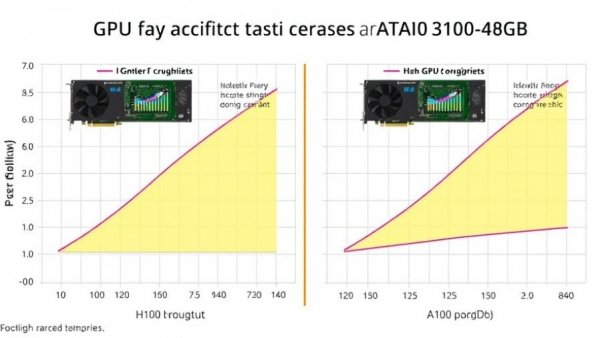
For enterprises evaluating their options, the choice between an older, whole GPU and an optimized MIG partition can be lucrative. Tests comparing a mig-3g.40gb partition on newer GPUs like the H100 against a full harnessing of older A100 models revealed a notable improvement in performance—much more output at a lower cost per million tokens processed. This level of granularity in cost analysis exemplifies the strategic advantage that MIG brings to modern businesses.
Future Directions: Embracing AI Effectively
As technology evolves, so do the strategies required for successful AI deployment. With advancements like NVIDIA's MIG now embedded in Amazon SageMaker, organizations can expect to optimize both performance and costs while maintaining reliable service delivery. Having the ability to configure partitions tailored to each model means businesses can keep pace with the increasingly competitive AI landscape.
The Road Ahead: Preparing for Success
Preparing to implement GPU partitioning involves assessing the real needs of each model. Organizations must analyze specific requirements in terms of compute and memory to ensure selected profiles align with operational demands. This structured approach not only enhances model deployment but also improves resource allocation, aligning with broader corporate financial strategies.
Call to Action
To explore how GPU partitioning can optimize your AI strategy and transform your organization’s capabilities, engage with our expert team. Learn how tailored AI solutions can drive your business objectives forward.


Write A Comment