

January 09.2025
2 Minutes Read
Unleash Business Efficiency with Amazon's Innovative Serverless AI Solutions
40 Views
0 Comments
Related Posts All Posts
11.18.2026
How Custom Metadata is Transforming Governance in AWS Agent Registry
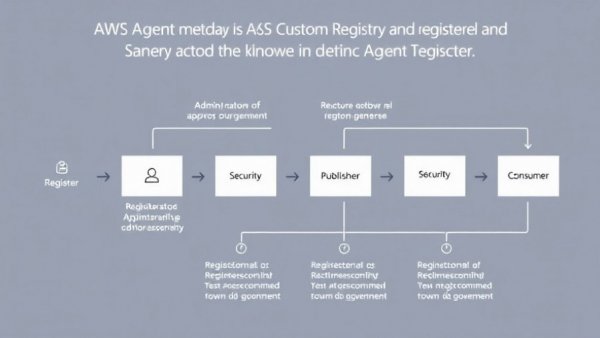
Update Unlocking the Power of Standardized Metadata in AWS Agent Registry As organizations expand their use of agents, Model Context Protocol (MCP) servers, and skills, a pressing need arises for a systematic framework to govern and locate these resources. Enter AWS Agent Registry, a comprehensive catalog for registering, approving, and discovering these specialized assets. Defining a Common Language for Resources AWS Agent Registry excels in creating a universal descriptor system, but until recently, organizations struggled with uniformity. Each individual entity has distinct attributes—like business units and resource owners—yet the system lacked a mechanism to uniformly define and track these specifics. This limitation often led to inefficiencies and guesswork across various teams. With the introduction of custom metadata schemas in AWS Agent Registry, administrators can now implement a tailored set of key-value pairs that records must adhere to. This innovation fosters a cohesive understanding among administrators, publishers, approvers, and consumers, streamlining the management of organizational assets in a decentralized digital landscape. Custom Metadata: A Game Changer for Governance Utilizing custom metadata enables teams to standardize the vocabulary for describing AWS Agent Registry records. The schema’s enforceability translates to consistent field names and types regardless of the team, bolstering accuracy and reducing friction in workflows. Such compliance not only enriches individual records but also enhances overall governance. For instance, fields like environment (development, staging, production) and security scan status become uniformly defined, allowing organizations to manage compliance and security with newfound confidence. This consistency enhances operational clarity and ensures fewer errors during record submission, particularly when it comes to sensitive areas like security and compliance. Real-World Application: A Case Study To illustrate the system’s capabilities, let’s explore how AnyCompany utilizes AWS Agent Registry to govern its MCP servers. The payments team publishes an MCP record named payments-ledger-mcp, designed for ledger lookup applications. Through a seamless integration with existing security and inventory systems, this record is automatically enriched with necessary attributes before moving to the approval stage. Subsequently, automated checks are employed to evaluate compliance based on defined criteria, enhancing the decision-making process regarding record approval. Here, AWS Agent Registry transforms record handling into a structured flow, allowing it to sit comfortably at the intersection of technology and robust governance. Enhancing Discoverability If the metadata describes the resources accurately, searchability becomes a powerful tool for efficiency. Consumers can leverage the discovery APIs to filter records based on custom attributes, effortlessly locating what they need with precision (e.g., environment=prod and securityScanStatus=PASSED). This proactive capability modifies traditional inventory searches by providing targeted results that meet real-time operational needs. Call to Action: Innovate with AWS Agent Registry Organizations looking to leverage AI and improve governance within their operations should explore the new functionalities of AWS Agent Registry. Custom metadata schemas not only enhance compliance and operational efficiency but also reap rewards in clarity and discoverability. For more insights and a deeper understanding, click here.
11.18.2026
Amazon SageMaker's KV Cache-Aware Routing: A Transformative Strategy for AI Leaders
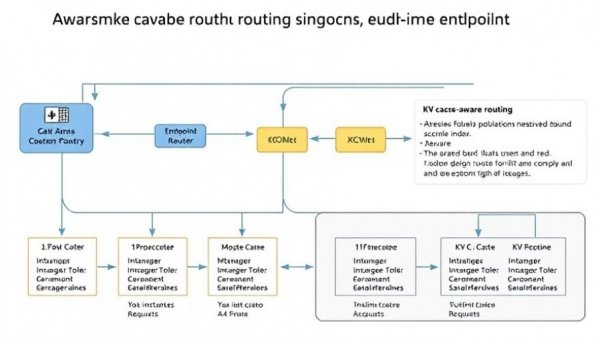
Update Revolutionizing AI with KV Cache-Aware Routing In the realm of artificial intelligence, efficiency and speed are paramount, especially when it comes to large language models (LLMs) handling multi-turn conversations. Enter Amazon SageMaker AI's newly introduced KV cache-aware routing (KV-aware routing) — a cutting-edge strategy designed to optimize real-time endpoint performance. This routing approach is particularly beneficial for organizations capable of appreciating and leveraging the full spectrum of AI advancements. Understanding KV Cache-Aware Routing KV-aware routing is adept at improving performance by utilizing the cache state reported by model containers. While previous methodologies, like prefix-aware routing, simply inferred where cache was likely to be found based on request prefixes, KV-aware routing takes a significant leap forward. It actively identifies instances that hold relevant cached content, thereby enhancing the efficiency of processing repeated prompts. This new solution is particularly important for businesses employing chat assistants and Retrieval Augmented Generation (RAG) systems, especially when dealing with long shared prompts and high traffic demands. By dynamically directing each request to the most suitable instance—one that has adequate cache and is also less busy—companies can significantly enhance user experience while reducing operational latency. The Problem It Addresses In many scenarios with LLMs, repeated prompts can create inefficiencies, particularly when workload spikes lead to cache eviction. Traditional routing strategies can cause new requests to land on instances that no longer hold the necessary cached data, thereby requiring potentially expensive re-computation. KV-aware routing resolves this issue by ensuring that requests are sent based on actual cache data rather than assumptions about where cached prompts may reside. This results in an astonishing performance boost: benchmarks display a potential 97% reduction in time to first token and an increase in throughput of up to 234% under high-load conditions. Implementation and Key Benefits Implementing KV-aware routing requires minimal setup—essentially toggling it on through your model's configuration. By adjusting just two parameters, organizations can enter a new era of AI implementation. Notably, it necessitates enabling KV cache events, ensuring that your container reports what it has cached. The benefits of utilizing this enhanced routing strategy are manifold: Optimized Performance: Instantly improves efficiency and reduces processing time. Increased Throughput: Handles more requests simultaneously without a hitch. Better Cache Management: Prevents unnecessary re-computation by making intelligent decisions based on real-time cache data. Flexible Configuration: Easily adaptable to existing systems, requiring little to no overhaul of existing AI frameworks. Why CEOs Should Care For leaders, particularly CEOs, CMOs, and COOs eager to drive organizational transformation via AI, understanding and adopting KV-aware routing could be a game changer. This innovative routing strategy positions companies to leverage LLMs more effectively, promising both cost savings and enhanced operational efficiencies. Actionable Insights for Leaders As organizations look to implement sophisticated AI systems, it’s essential to recognize the strategic investments in technologies that improve both capability and scalability. Implementing KV-aware routing can lead to markedly improved customer interactions and reduced latency during peak usage times. To explore how your organization can implement these real-time endpoints effectively, visit this detailed guide: Take action now!
11.18.2026
Cut Your Generative AI Costs: Learn When to Skip the Model Call
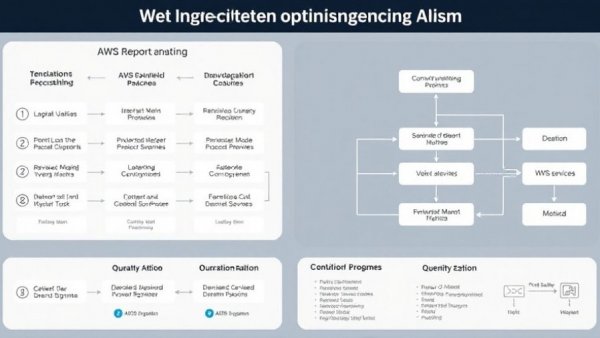
Update Understanding Generative AI Cost Management Navigating the complexities of generative AI can lead to soaring costs if not managed effectively. Most often, the primary expenses come from unnecessary model calls. Organizations frequently fall into the trap of routing every workflow through large language models (LLMs), which, while initially efficient for prototyping, becomes costly as production scales. By reframing how we think about these workflows, saving money becomes a straightforward endeavor. Assessing the Need for Model Calls Before implementing a model at every stage of a workflow, it’s crucial to critically assess whether a step truly necessitates it. For example, regulations in areas like banking or healthcare often favor deterministic rules over models due to their predictable nature. Each model call can add not just cost but also latency and unpredictability in outcomes. Implementing Deterministic Code for Cost Efficiency A significant savings opportunity arises by replacing model calls with deterministic code wherever possible. For instance, using simple rule checks for tasks like validating input formats offers a lower-cost solution that drastically improves system responsiveness. Additionally, creating code to address fixed lists of potential outcomes can streamline processes without sacrificing effectiveness. Leveraging AWS for Optimal Decision-Making Amazon’s suite of tools provides a framework for integrating both deterministic rules and models, reducing reliance on LLMs while retaining functionality. Using components like AWS Lambda for rule checks and Amazon Bedrock for tasks that need generative models allows businesses to maintain quality without escalating costs unjustifiably. Outlining a Strategy for Generative AI Implementation Concrete steps toward smarter generative AI usage include tagging calls as deterministic or model-driven, moving rules into AWS code structures, and utilizing constrained decision calls where applicable. Such a structured approach not only cuts unnecessary expenses but also improves the audibility and reliability of decisions made by these systems. A noteworthy example of this strategy in action is utilizing AWS Step Functions to create controlled decision pathways, leading to increased response times and lower operational costs. Future Implications of Cost Optimization in AI As AI technologies continue to evolve, companies that master cost reduction through effective decision-making will have a competitive edge in innovation and profitability. The landscape of generative AI is shifting towards more efficient, hybrid architectures that harness both deterministic rules and learning models strategically. Proactive decision-making regarding when to use a model could pave the way for a new era in operational efficiency. In conclusion, understanding the underlying costs associated with generative AI processes is imperative for organizational transformation. Taking the time to evaluate the necessity of model calls, coupled with adopting AWS tools, can streamline operations significantly. By learning to prioritize deterministic solutions wherever feasible, organizations can enhance their productivity and reduce costs effectively. For specialized insights and consultation on revolutionizing your AI strategies, get in touch with our expert team.


Write a small description of your business and the core features and benefits of your products.


LPJM SOLUTIONS
(571) 269-6328
AVAILABLE FROM 8AM - 5PM
City, State
10 Church St. Manchester, CT, 06040 USA
ABOUT US
Our CORE values for almost 27 year have been LOVE, Loyalty & Life-Long Friendship.
AI has made this the Golden Age of Digital Marketing.
© 2026 CompanyName All Rights Reserved. Address . Contact Us . Terms of Service . Privacy Policy

Write A Comment