

Understanding AI Data Centers: A Growing Sector
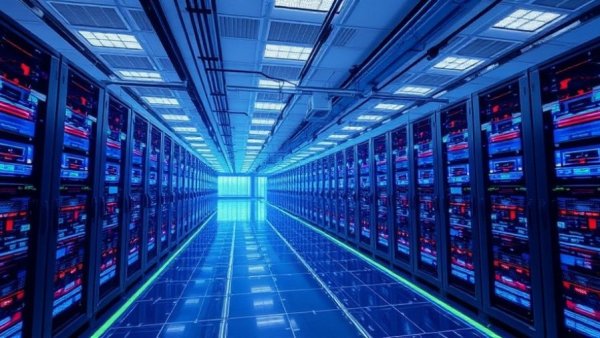
AI data centers represent the forefront of technology infrastructure developed specifically to support artificial intelligence functionalities. These facilities are significantly distinct from traditional data centers, not just in design but also in their operational capacity. While typical data centers operate with racks that draw around 8 kW, AI data centers leverage advanced GPUs and TPUs, which can draw up to 140 kW per rack, completely shifting the paradigm of power consumption in data storage and processing.
The Surge of AI Data Centers in the U.S.
As we stand in 2026, the construction of AI data centers has seen unprecedented growth, soaring to an annual rate of $96.5 billion. This significant investment is reflected in the increasing demand for computational power to process complex AI models. With estimates predicting that the IT power of AI data centers will grow from 15.1 gigawatts today to 38 gigawatts by 2028, enablers of AI innovation are quickly recognizing the necessity for robust and efficient infrastructure.
The Workings of AI Data Centers: What Sets Them Apart?
AI data centers incorporate specialized chips such as Nvidia GPUs and Google TPUs, which facilitate higher processing capacities. For perspective, Amazon’s New Carlisle campus has been reported to generate about 1.04 GW of IT power, a staggering amount equivalent to the power supply of a medium-sized city. The technical prowess is also complemented by state-of-the-art cooling technologies, which utilize liquid cooling systems to handle the extreme heat generated by high-density processing units.
Future Perspectives: What’s Next?
Looking ahead, several trends can be anticipated in the realm of AI data centers. The continuous surge in demand for AI-powered solutions forecasts not only a geographical spread, with emerging AI data centers in regions like Malaysia and China, but also a further increase in energy consumption. The U.S. data centers currently consume about 4.7% of the nation’s electricity, a figure that could rise sharply to between 9.5% and 15.3% in the coming years. This trajectory raises vital discussions regarding sustainability practices in energy consumption.
Investing in AI Data Centers: What Business Leaders Should Know
For executives and senior managers, the decision to invest in AI infrastructure should be driven not only by potential profitability but also by a clear understanding of operational logistics and energy impact. Integrating AI capabilities requires efficient resource management strategies and sustainable practices, as organizations work to align technological advancements with corporate responsibility.
Take Action: Connect to Enhance Your AI Strategy
In such a rapidly evolving industry, leveraging insights from experienced professionals can significantly benefit your business strategy. For deeper understanding and actionable insights for enhancing your AI integration, engage with our network.
Connect with us now!





Write A Comment