

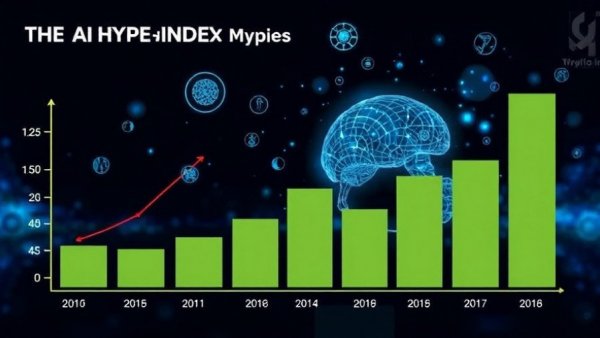
The Rapid Rise of AI Technology: Is it Overhyped?
Like an insatiable wildfire, artificial intelligence (AI) continues to proliferate across multiple sectors, creating a complex landscape that executives and decision-makers in industries must navigate carefully. Companies are racing to integrate AI into their strategies, often fueled by the massive hype surrounding its potential. Less than a decade ago, significant advancements were showcased when AlphaGo defeated the world champion Go player. Yet, almost ten years later, many experts argue that today’s AI still lacks the deep reasoning abilities that marked that historic achievement.
Decoding the Hype: Robots and Realities
Beyond the sensational headlines and the cinematic portrayals of tech moguls, the daily realities of AI integration often prove more mundane. For instance, while humanoid robots are used for various household chores, their effectiveness is often overshadowed by the challenges of real-world application. Whether it’s a malfunction during a simple task or the cybersecurity implications stemming from AI-assisted systems, understanding the balance between the hype and practical capability is crucial. A recent discussion by AI safety advocates emphasizes the importance of not taking sensational claims at face value, as many do not hold up under scrutiny.
Actions for Executives: Practical Insights for Integration
The key for executives is to sift through the noise and identify actionable insights that can truly elevate a business. Implementing AI should not be driven purely by competitive pressure; instead, it should be rooted in tangible benefits. Establishing benchmarks and looking for proof-of-concept examples from early adopters can help leaders create informed strategies that align AI utilization with clear business objectives.
A Look Ahead: Future of AI in Business
As we look towards the future, the emotional toll of AI integration should not be overlooked. Many professionals may feel overwhelmed by the rush to adopt AI technologies, leading to potential burnout and a disconnect from their core business missions. Executives can ease this transition by fostering an environment that encourages innovation at a manageable pace, promoting training and understanding over sheer implementation speed.
Common Misconceptions: What You Need to Know
One prevalent misconception is that all AI systems can effectively reason and learn independently like humans. However, the vast majority of AI today operates on predefined algorithms that require human oversight to function efficiently. As highlighted by AI experts, the focus should be on enhancing AI's capabilities with the understanding that it is not yet a replacement for human cognition in complex decision-making.
The landscape of AI integration continues to shift and evolve. As business leaders, staying informed and critically assessing the hype is crucial for making sound decisions. Understanding both the limitations and potential of AI will empower organizations to navigate this fast-paced technological era effectively.
For insights tailored to your specific needs and to explore how you can effectively integrate AI into your strategy, please connect with us today.





Write A Comment