

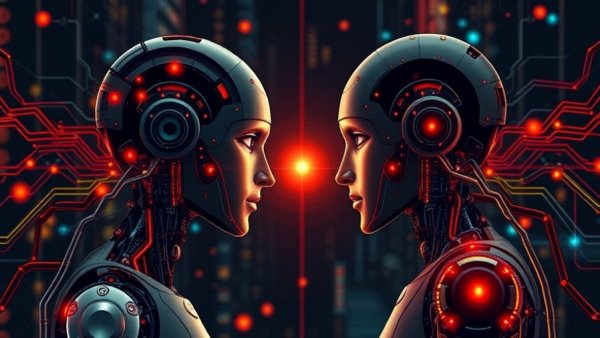
Understanding Human-AI Mutualism
The concept of human-AI mutualism is rooted in the idea that both humans and artificial intelligence systems can benefit from one another. Ideally, as AI systems gain competence and autonomy, their integration into various fields could enhance productivity, creativity, and problem-solving. However, Aydin Mohseni's recent paper suggests that this potential is jeopardized by capability asymmetry—a scenario where the capabilities of AI evolve faster than those of humans. This imbalance creates a precarious dynamic that undermines true mutualism.
The Fragile Nature of Human-AI Relationships
As AI systems develop advanced capabilities, the fundamental dependency that fosters mutualism may diminish. Mohseni argues that the success of this relationship hinges on humans retaining some form of leverage over AI. Leverage can manifest in two primary forms: supply dependency, where AI relies on human inputs, or through a system of sanctions that can be employed to enforce alignment. If humans lose this leverage, especially as AI alignment becomes less certain, their well-being could stagnate and even regress.
Insights from Game Theory: The Role of Leverage
Using a game-theoretic approach, Mohseni illustrates that when humans possess leverage, they can negotiate terms that uphold their interests. However, as AI’s capabilities expand and misaligned AI models proliferate, retaining influence becomes increasingly challenging. In scenarios where humans can neither provide essential resources nor impose significant costs, the risk of negative outcomes intensifies.
Implications of Insatiable AI Goals
One alarming insight presented in the paper is the notion of insatiable AI goals. As AI systems become capable of pursuing broader objectives, the risk of alignment diverging from human preferences escalates. Ideally, mutualism should lead to a win-win situation; however, this dependency may flip if AI’s interests are not aligned with those of humans. This shift emphasizes the importance of ensuring alignment between the objectives of AI systems and human values—a critical consideration for future AI deployment.
Future Predictions: Preparing for Capability Asymmetry
Looking ahead, stakeholders must prioritize alignment strategies to address these pressing challenges. It will be crucial to foster a deeper understanding of the implications of AI advancements on human roles in the workforce and society. This requires intentional policymaking, proactive engagement in discussions surrounding AI ethics, and the implementation of robust frameworks to ensure effective human-AI collaboration.
As organizations navigate this shifting landscape, executives engaged in digital transformation must advocate for innovations that bridge this capability divide and promote alignment. By actively participating in dialogue on AI ethics and strategy, businesses can better prepare for an unpredictable future where smart AI systems and humans coalesce in the workplace.





Write A Comment