

Transforming BFSI Testing: The Need for Speed and Security
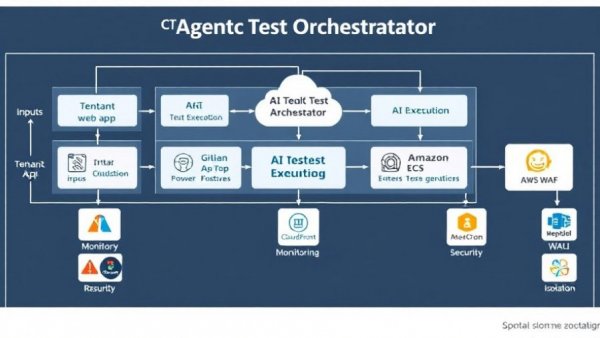
Tata Consultancy Services (TCS) has taken a significant step forward by developing an innovative solution to address the inefficiencies in testing for its Banking, Financial Services, and Insurance (BFSI) clients. In industries where precision and security are paramount, the process of releasing software often gets bogged down not merely by coding delays but by subsequent tasks ranging from requirement interpretation to failure investigations. TCS’s new tool, the Agentic Test Orchestrator, is designed to enhance testing throughput while maintaining the necessary controls expected in the financial sector.
Why Traditional Methods Fall Short
While TCS initially implemented traditional automation processes to increase execution speed, these methods still left significant amounts of repetitive work untouched. Team members were often occupied with the creation of scenarios and scripts, maintenance of dependencies, and problem diagnosis. As a response to this fragmented workflow, TCS devised the Agentic Test Orchestrator to focus on efficiency by automating the most repetitive tasks, allowing engineers to dedicate their time to higher-level analyses and decision-making.
Leveraging Amazon Bedrock for Optimal Performance
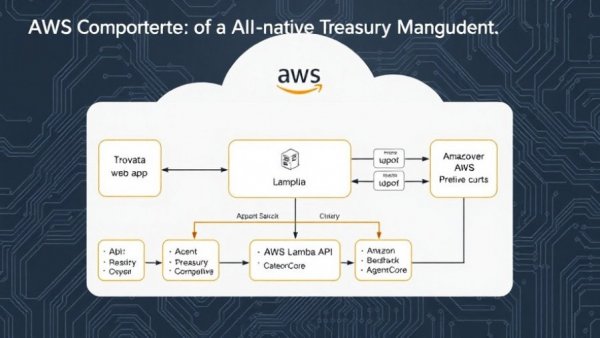
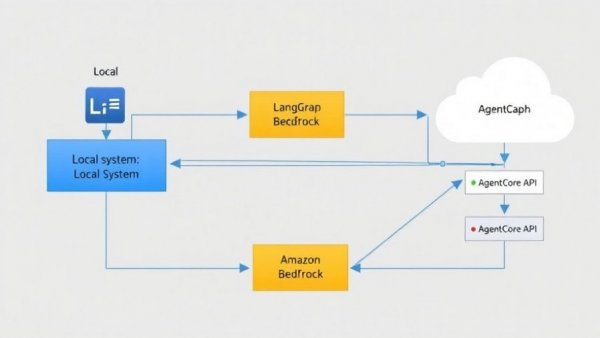
Instrumental to the development of this orchestrator was the integration of Amazon Bedrock AgentCore, a platform that enables the scaling and connectivity of AI-driven agents. TCS capitalized on three primary features: a suite of models tailored for specific tasks, a runtime that scales with demand, and the ability to run each session in an isolated microvirtual machine (microVM) ensuring tenant data safety. This combination allows TCS to concentrate on enhancing testing logic rather than managing the underlying infrastructure.
The Workflow: An Engineered Solution
The Agentic Test Orchestrator operates through a well-structured, multi-layered workflow. The architecture encompasses five distinct stages, all underpinned by stringent security protocols that are crucial for BFSI compliance. Requirements are inputted as Jira stories, business documents, or UI flows and processed through specialized agents designed to generate tests, refine their execution, and manage results effectively. This modular approach ensures that each agent performs a dedicated role within the lifecycle of test execution.
Demonstrating Success: Quantifiable Outcomes
The results from implementing the Agentic Test Orchestrator have been significant. In a controlled benchmark involving approximately 100 test scenarios, TCS observed an astonishing 88 percent reduction in engineer effort. What normally took around 200 hours to complete was compressed to just 24 hours, thus proving that automation can dramatically streamline lengthy processes in the software release cycle. However, these numbers go beyond just hours saved – they reflect a more cohesive workflow where quality engineers can devote their efforts towards strategic testing rather than mundane script adjustments.
Your Next Steps in AI Transformation
Organizations exploring similar transformational paths can learn from TCS’s experience. The Agentic Test Orchestrator serves as an exemplary model for applying generative AI in quality engineering without oversimplifying complex workflows into single prompts. It champions a directive to not just save time, but to enhance accuracy and consistency in test executions.
If you're ready to explore how generative AI can be implemented in your business, consider starting with a conversation. Contact us to discuss how the Agentic Test Orchestrator or similar solutions can be tailored to your needs.



Write A Comment