

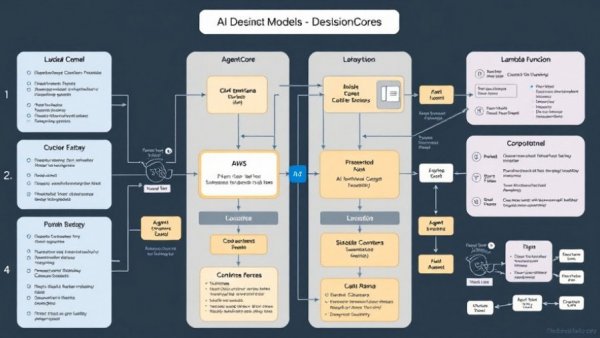
Unlocking the Power of Decision Models in Evaluating AI Agents
As organizations strive to leverage AI for transformative capabilities, understanding the nuances of evaluating AI agents has become crucial for business leaders. Effective evaluations can lead to enhanced operational strategies, improved decision-making processes, and ultimately, more successful implementations of AI technologies. Amazon Bedrock's AgentCore Evaluations offers a structured way of assessing AI agents using decision models, providing calibrated confidence scores over free-form text outputs.
What Are Decision Models and Why Are They Valuable?
Decision models are tailored algorithms designed to select from predetermined options and generate reliability scores, rather than crafting complex texts. For example, a decision model can clearly address narrow but critical questions like, “Did this response adhere to policy?” or “Is the output relevant to the user's request?” This specificity reduces ambiguity and enhances trust. Business leaders, including CEOs and CMOs, stand to gain from implementing decision models for reliable insights into AI performance, especially in environments where precision is key.
Leveraging Amazon Bedrock AgentCore for Lifecycle Scoring
Amazon Bedrock's AgentCore Evaluations takes a comprehensive approach by scoring agents throughout their lifecycle—the evaluations can be conducted during initial development, through batch jobs against historical data, and in real-time against live traffic. This versatile capability encourages continuous improvement and adaptation of AI agents, strengthening their alignment with organizational goals.
The Choice Between Custom LLMs and Decision Models
When evaluating agents, the choice between using a custom Large Language Model (LLM) as a judge versus a decision model must be considered carefully. LLMs provide narrative-based scores with rationale, useful for more qualitative assessments. However, decision models shine in scenarios requiring quick, definitive answers that can be easily quantified and thresholded. The decision model routes allow organizations to streamline evaluations, identifying risks needing deeper analysis while automating basic assessment tasks.
Integrating Third-Party Decision Models for Innovation
A notable feature of AgentCore Evaluations is the ability to integrate third-party decision models like TypeSafe’s Jev and Strands Decider 2B. These systems can process up to 255 options, offering a nuanced understanding of AI output, which is essential for maintaining high standards of service and relevance. The adoption of various evaluative frameworks can foster innovation, ensuring AI adaptations remain aligned with evolving organizational needs.
Conclusion: Embrace Structured Evaluations for Future Growth
As businesses continue to explore the vast applications of AI, integrating structured decision-making tools like Amazon Bedrock’s AgentCore and decision models will become imperative. By doing so, organizations can expect not just enhanced accuracy but also improved overall effectiveness of their AI strategies. Ready to transform your evaluations? Chat with us today to explore how these innovative tools can benefit your organization!


Write A Comment