

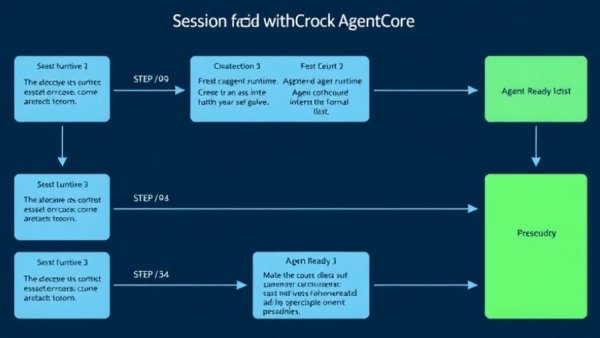
Unlocking Rapid Session Startup in AI with Amazon Bedrock AgentCore
As organizations increasingly rely on AI for efficiency, the startup performance of AI agents is pivotal. Traditionally, agents operate behind the scenes, processing tasks ranging from code reviews to claims management, each with a critical initial response time. The Amazon Bedrock AgentCore runtime addresses these challenges with a serverless environment, optimizing resource use and cost. With the rollout of platformVersion 'V2', session startups have seen a paradigm shift, promising faster and more consistent performance.
What’s New in Version 2?
The crux of V2's innovation lies in its efficient handling of sessions. Unlike its predecessor, V2 eliminates the necessity of initializing a new container for each session, significantly reducing session startup times. Instead, it prepares the environment once, captures a snapshot, and applies this snapshot during new sessions. This not only minimizes initialization overhead but also allows for the reclamation of unused memory, ensuring that companies only pay for the resources they actively use.
Reducing Latency: Strategies for Success
In a landscape where every millisecond counts, knowing how to optimize your agents is crucial. The latency of an agent application isn't solely about connection speed; it involves intricate details about how requests are processed, including initialization and the time it takes for the first byte to reach the user. By identifying areas where latency can be improved—whether that be in code execution, tool calls, or even in how and when sessions are started—organizations can achieve substantial enhancements in user experience.
How to Measure and Analyze Session Start Times
Effective monitoring begins with understanding the metrics provided by Amazon CloudWatch. Metrics like 'Latency' and 'OverheadLatency' are essential for gaining insights into where delays originate. By logging initialization times and understanding how these metrics fluctuate with different workloads, teams can pinpoint bottlenecks and adjust accordingly. Prioritizing preemptive actions, like starting sessions before user requests, can further optimize performance, ensuring that responses are as timely as possible.
Implementing Build Hooks for Enhanced Performance
For applications requiring large files or complex libraries during the initialization phase, incorporating build hooks can streamline processes. Build hooks allow an agent to load essential components without delaying session responses. By pre-loading necessary files or dependencies during the initialization phase, these agents can quickly establish workflows, substantially enhancing response times when users first engage.
Future Predictions: The Evolution of AI Performance
Looking ahead, the implementation of Amazon Bedrock AgentCore is likely to pioneer new pathways for AI. Innovations that allow for sub-second response times—as expected in chat or voice interactions—could redefine user expectations in customer service and beyond. As more industries embrace AI, the need for real-time responsiveness will only escalate, driving continuous advancement in agent frameworks.
Conclusion: Why It Matters for Leaders
For CEOs, CMOs, and COOs, recognizing the impact of technology on operational efficiency is critical. By leveraging advancements such as Amazon Bedrock AgentCore, organizations can gain a competitive edge in delivering AI-driven solutions. Keeping abreast of these innovations allows leaders to make informed decisions about technology investments that drive organizational transformation.
Explore further how your organization can benefit: Engage with us!



Write A Comment