

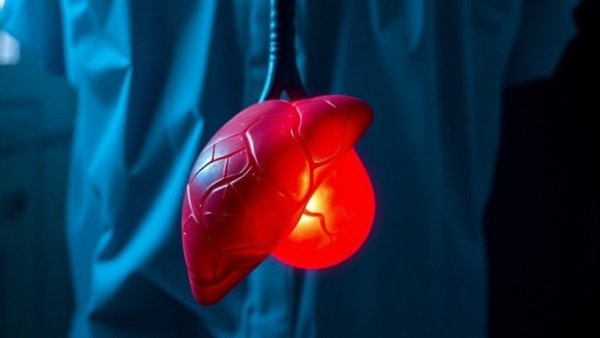
Revolutionizing Organ Preservation: A Landmark Achievement
In an unprecedented breakthrough, researchers in Australia made headlines by successfully keeping a human liver alive outside the body for a record seven weeks. This innovative feat, led by surgeon Carlo Pulitano at the Royal Prince Alfred Hospital in Sydney, utilized an Extended Organ Perfusion System, merging cutting-edge technology with a pioneering vision for organ transplantation.
Traditionally, human organs have a limited lifespan outside the body, typically surviving just a few hours when preserved in ice. However, Pulitano's system incorporates automated pumps and sensors to continuously supply the liver with nutrients, blood, and waste removal, creating a simulated organ environment. "Our group is the only one in the world to have maintained a human liver under fully normothermic, physiological conditions for seven weeks," he stated, highlighting the significance of this achievement.
Understanding Normothermic Preservation
Normothermic preservation refers to the practice of keeping organs at human body temperature (approximately 37 °C), a crucial factor for maintaining organ viability. Prior to this breakthrough, the record for ex-vivo organ preservation was achieved in Switzerland, where a liver survived for roughly two weeks. This new method extends that duration significantly, introducing a transformative era for organ donation and transplantation.
By automating the perfusion process used to keep the liver alive, the research team reported that the average survival time for organs surged to around four weeks when using their advanced system. This system not only preserves vital organs longer but also has potential implications for regenerative medicine, creating speculation about innovations such as artificial organs.
Potential Medical Benefits of Extended Preservation
The implications of preserving organs for extended periods are manifold. Reports suggest that organs on perfusion may begin to repair themselves, enhancing their quality for transplantation. In fact, following similar perfusion techniques, surgeons have successfully transplanted healing organs after they remained outside the body for several days. This regenerative capacity is pivotal, as it opens up new avenues in treating patients with organ damage or failures.
One of the future goals outlined by Pulitano and his team is the concept of “time-unlimited liver preservation.” The ability to keep livers alive for longer durations paves the way for increased opportunity to transplant lower-quality organs that may otherwise be discarded. For instance, startups like Aeternum Life Technologies are already collaborating for trials that explore transplanting low-quality livers preserved for four days.
Strategic Implications for the Healthcare Industry
As this research progresses, the strategic implications for healthcare executives cannot be understated. An advanced understanding of organ preservation has the potential to reshape transplant protocols globally. Organizations contemplating entry into related technologies will recognize the competitive advantage of adopting these innovations early on.
Additionally, this remarkable achievement encourages a holistic view of health care resiliency against organ shortages— a critical challenge many nations face. Ideally, prolonged preservation would not only facilitate organ availability but also enhance the quality of life for patients awaiting transplants.
Future Visions: Exploring the Boundaries of Medical Innovation
Looking ahead, the capability for long-term organ support could revolutionize approaches to organ manufacturing and possibly lead to breakthroughs in artificial womb technologies. As medical professionals like Paulo Martins from the University of Oklahoma suggest, the plethora of benefits ranging from organ healing to potential advancements in biomanufacturing should spark keen interest among industry leaders in biotechnology and healthcare sectors.
While this academic endeavor awaits formal publication and peer review, the results introduce exciting forward-thinking questions about the future of organ transplantation and regeneration. The nuance of how these advances fit into operational practices and cost dynamics in healthcare will be a point of ongoing observation.
As the medical community anticipates the next steps, particularly how to implement these findings within clinical settings effectively, it is essential for industry stakeholders to remain engaged with emerging studies and innovations in this field.
For executives seeking to adapt their strategies in light of these innovations in biotechnology and healthcare, the opportunity is ripe for exploration. To delve deeper into transformative trends shaping the future of biomedicine and integrate them into your organizational framework, connect with us!




Write A Comment