

Understanding the Impact of AI Team Dynamics on Productivity
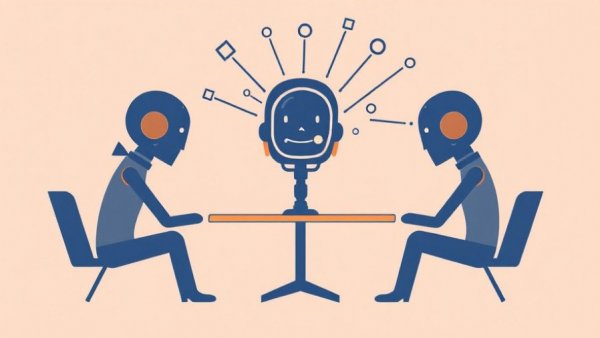
As generative AI continues to transform workplaces, understanding how human-AI collaboration shapes innovation is paramount. Recent research demonstrates that the configuration of AI partnerships—one versus two AI agents—drastically alters the productivity levels of human team members. Interestingly, a two-AI setup led to an increase in the number of ideas shared; however, it also witnessed a significant decrease in the quality of human-originating ideas. This paradox raises critical questions for organizations aiming for optimal productivity: Is more always better when it comes to AI partnerships?
The Role of AI Formation in Enhancing Human Contributions
An intriguing finding from the study indicates that when humans paired with a single AI partner calibrated to average human behavior, they were able to produce their best outputs. However, the benefits of using one AI partner diminish when a second AI is introduced into the scenario. This suggests that the presence of two AI agents can create an overwhelming dynamic that constrains human creativity. Fairly, executives and team leaders must evaluate the ideal formation of AI partners to maximize innovation, emphasizing quality over quantity.
Implications for Team Leaders Embracing AI Innovations
For executives in fast-growing companies, particularly those driving digital transformation, the implications of these findings are profound. Team leaders must understand that AI can indeed enhance productivity, but only under certain conditions. The challenge lies in strategically implementing AI solutions that complement and boost human capabilities rather than hinder them. Human-led discussions, alongside controlled AI interventions, could yield a better environment for idea generation.
Diversity of Ideas: A Trade-Off?
AI's presence was correlated with an increase in the global diversity of human-authored ideas; however, introducing additional AI agents diminished the differentiation of ideas produced within a single session. This raises critical issues of trade-offs that organizations must consider. To foster innovation, team leaders need to make informed decisions about the number and function of AI agents. Balancing diversity and idea quality is essential for sustainable creative outputs.
Actionable Insights for Harnessing AI Partnerships
Organizations can leverage these findings to create a framework for effective human-AI brainstorming. First, consider piloting AI interventions on a smaller scale before expanding them into larger units. Tailoring AI interaction models to promote dialogue and human participation can optimize the overall brainstorming process. Another approach involves training AI to be more empathetic to human weaknesses, allowing it to better guide conversations and enhance the overall brainstorming experience.
As executives navigate the complexities of integrating AI into their teams, the insights from the research on team size, agent formation, and productivity can serve as valuable guiding principles. Ultimately, driving successful innovation will require an adaptable strategy that prioritizes human input, supported by AI enhancement.
To explore more about optimizing AI partnerships for improved productivity and creativity, please check out [this insightful resource](https://bit.ly/MIKE-CHAT).





Write A Comment