

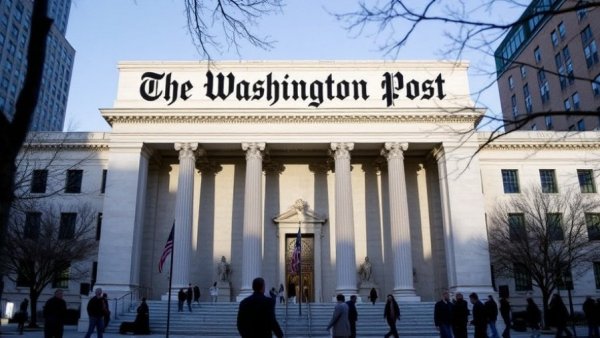
Washington Post Rises from Financial Turmoil: A Glimpse into Recovery
After enduring years of substantial financial losses and leadership changes, The Washington Post is on the brink of achieving financial stability, as confirmed by executive editor Matt Murray during a recent interview at the Web Summit in Lisbon. This potential turnaround is particularly notable as it comes after a tumultuous period marked by layoffs, buyouts, and a significant focus on reshaping the organization’s approach to journalism.
Strong Performance amidst Challenges
According to Murray, The Post experienced its best revenue growth in direct advertising sales since 2021, with programmatic revenue climbing by 48% year-over-year. With a renewed focus on Washington, D.C., and a revamped newsroom, the publication has started to recapture significant audiences. Murray expressed optimism, stating, "I expect next year will be our best year in seven years," a statement that reflects both the optimism and the challenges inherent in modern media business operations.
Leadership Dynamics and Cultural Shift
The leadership transition from Will Lewis to Jeff D’Onofrio has brought a data-driven approach and calm focus on fundamentals. D’Onofrio's style contrasts with his predecessor, and Murray acknowledges that the shift towards a more analytical perspective has been necessary to turn the tide for The Post. He mentioned, "We didn’t have great data" regarding audience engagement and demographics, highlighting the need for a shift that aligns with evolving media consumption habits.
Targeting the Next Generation of Readers
Murray emphasized the importance of understanding the newer generations, particularly millennials and Gen Z, who are shaping a post-Trump Washington. His vision extends beyond simply capturing readership; it’s about understanding the nuanced interests and concerns of a younger audience that increasingly wields influence in societal dynamics. “We’ve had real successes this year,” he noted, discussing the need for The Post to amplify local stories, community issues, and younger demographic interests, emphasizing the role that innovative journalism plays in connecting with this evolving audience.
Conclusion: A New Era for The Washington Post
This strategic shift is timely as the media landscape undergoes rapid changes, requiring traditional publications like The Post to adapt continually. With these efforts, The Post aims to not only weather financial storms but to emerge as a leader in thought and innovation within the media space. For those interested in understanding the future of media business dynamics, staying informed about such changes is crucial.
If you are an executive-level decision-maker eager to explore AI strategies for scaling your business growth, connect with us for insights tailored to your aspirations. Chat with us today!




Write A Comment