

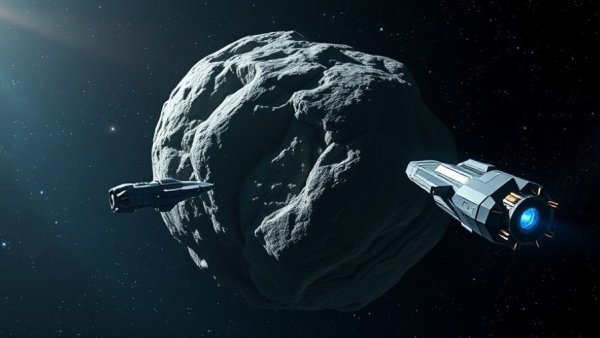
Understanding the Risks: Why Asteroid Defense Matters
The potential threat of asteroids colliding with Earth is not just fiction—it’s a real concern backed by history. The Tunguska Event of 1908 serves as a stark reminder of the devastation a rogue asteroid can cause, even one as small as 30 meters. This explosion flattened an estimated 80 million trees over 2,000 square kilometers, demonstrating how small celestial bodies can wreak havoc on our planet.
NASA's Groundbreaking DART Mission: A New Hope for Planetary Defense
NASA’s Double Asteroid Redirection Test (DART), launched in late 2021, represents a leap forward in our ability to defend against such threats. By successfully altering the orbit of Dimorphos, a minor moon orbiting the larger asteroid Didymos, DART proved that we could effectively change an asteroid's trajectory—potentially saving Earth from a catastrophic impact. The fact that Dimorphos's orbit changed by 33 minutes is not just a numerical victory; it underscores the significant potential of planetary defense technologies.
The Role of ESA's Hera in Future Defense Strategies
As NASA makes strides in asteroid deflection, the European Space Agency’s Hera mission is set to enhance our understanding further. Hera's mission, which began its journey to Didymos and Dimorphos, aims to study the outcomes of DART’s impact. This exploration of the collision site will allow scientists to gather data that could extend our capabilities in planetary defense. By understanding the mechanics behind asteroid formations and impacts, we can develop better reactive measures to safeguard our planet.
What Lies Ahead: Future Predictions in Asteroid Monitoring
With our current technological advancements, astronomers can predict the paths of asteroids like Apophis, slated to fly by Earth in April 2029. As we increase our monitoring capabilities, the ability to identify potentially hazardous asteroids will continue to improve. Integrating AI and advanced algorithms into these prediction models might accelerate the identification process, making us more proactive rather than reactive.
Taking Action: What Businesses Can Learn from Asteroid Defense Strategies
Businesses can draw on the principles of planetary defense for their strategic planning. Just as NASA employs meticulously planned missions to mitigate risks from asteroids, companies in various sectors can apply similar strategies to navigate challenges. Understanding risk management, proactive planning, and timely execution can allow organizations not only to survive but thrive, just as DART successfully diverted a potential crisis.
Engaging in Dialogue: The Importance of Public Awareness and Education
To elevate the effectiveness of planetary defense efforts, public awareness and education on such topics must flourish. As technology advances, initiatives like DART and Hera can serve as educational case studies for how collaborative efforts across nations can lead to significant achievements. Encouraging discussions about space science at community levels will inspire future generations to engage in STEM, paving the way for experts in the field.
As we reflect on the milestones achieved by NASA and the ESA, it's clear that the collaboration of scientific entities can yield innovations that protect our planet. To embark on this journey of understanding AI strategies that can be integrated into broader business practices, connect with professionals in the field and discover pathways to innovation. Join the conversation today!





Write A Comment