

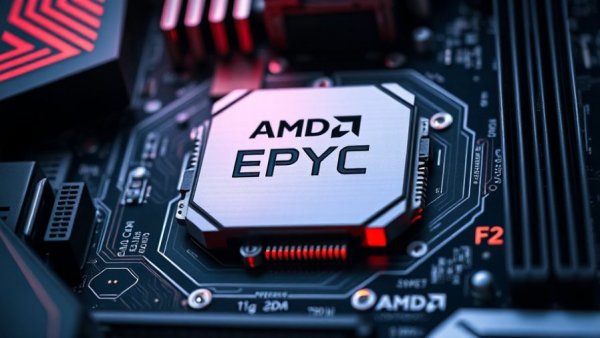
AMD Unveils Next-Gen Epyc 6 Processors for Enhanced AI Workloads
In an era where artificial intelligence (AI) reshapes industries, Advanced Micro Devices Inc. (AMD) has introduced its Epyc 6 processors, promising to optimize server performance tailored for AI-driven tasks. Known as Venice, this new series boasts ten central processing units (CPUs) that cater to diverse workloads using two architectural approaches: a line of slower, yet numerous cores, and another comprising fewer high-frequency cores.
Performance Enhancements: Core Count vs. Clock Speed
The Epyc 6 processors are designed to maximize performance per watt, revealing AMD’s strategic focus on efficiency. The architecture allows for up to 3.3 times more AI agents to run per watt compared to competitors like Nvidia's Vera CPU. This translates to significant cost savings for enterprises, particularly those utilizing databases with pricing structures based on core counts. For example, using a single high-frequency core could be more cost-effective than deploying two lower-speed cores, leading to a reduction in operational expenses.
Architectural Advancements with Zen 6
The Epyc 6 series is built on the innovative Zen 6 core architecture, which enhances performance metrics. In fact, its Instructions Per Cycle (IPC) is reported to be 31% greater than its predecessors, marking a notable leap in efficiently tackling AI workloads. This enhancement is driven largely by AMD’s shift to Taiwan Semiconductor Manufacturing Co.’s latest two-nanometer fabrication process.
AI Optimization: A Competitive Edge in the Market
AMD is not merely a follower in the AI space; it has integrated specific optimizations into its Epyc 6 series that further emphasize its position as a leader. The architecture's compatibility with FP16 data formats lowers the hardware footprint required for AI agent processing, while the improved support for VNNI-INT8 technology condenses multi-step AI calculations into streamlined operations, thereby saving valuable processing time.
Real-World Applications and Adoption
With several major data center suppliers already deploying Epyc 6-based servers, and the processors powering Microsoft Azure instances for AI workloads, the practical implications of this launch are profound. These advancements signal a pivotal shift in how organizations can leverage AI, enhancing data processing capabilities and enabling more complex tasks to be conducted at unprecedented efficiency.
Looking Ahead: The Future of AI and Computing
The release of AMD's Epyc 6 processors is not just a technology upgrade; it represents a broader trend towards integrating AI more deeply in enterprise strategies. As companies strive to harness AI to improve their processes, investing in powerful and efficient processors will be critical. Dan McNamara, AMD’s senior vice president, aptly notes, “AI is significantly expanding the role of the CPU across every layer of the data center.” This acknowledgment reflects a growing industry sentiment that the CPU will continue playing a monumental role in AI deployments.
The introduction of Epyc 6 processors heralds not just a competitive advantage for AMD but also positions enterprises to rethink their strategies to include AI. As these technologies evolve, understanding and adapting to the landscape will be essential for decision-makers aiming to thrive in the age of AI.




Write A Comment